
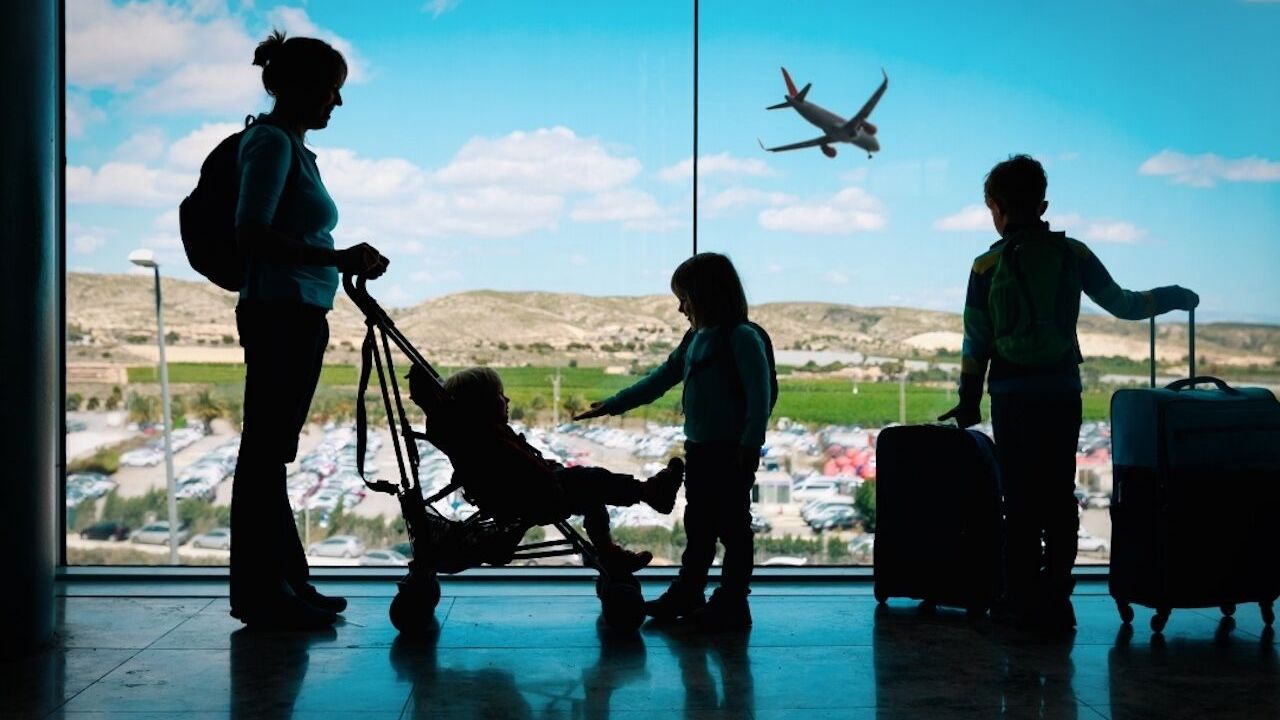
A piece of advice circulating widely on social media recently caught my attention: “If you have money, don’t even go on holiday.
A piece of advice circulating widely on social media recently caught my attention: “If you have money, don’t even go on holiday. Forget vacations for the next two or three years. Save every penny for the difficult days ahead.”
At first glance, it sounds sensible.
After all, Türkiye is going through a difficult economic period. Inflation remains stubbornly high. The cost of living continues to squeeze households. Rising rents, food prices, borrowing costs and interest rates are putting enormous pressure on both family budgets and corporate balance sheets. The middle class is steadily shrinking, while millions of fixed-income earners look to the future with growing anxiety.
Under such circumstances, strengthening household finances, reviewing spending habits and building financial resilience are unquestionably prudent.
Yet this raises a more fundamental question.
Is saving money the same as putting life on hold?
I would argue that it is not.
Indeed, one of the greatest costs of prolonged economic uncertainty is not simply the loss of purchasing power. It is allowing fear about tomorrow to dictate how we live today.
The Economics of Fear
Economics is often presented as a discipline of numbers—interest rates, exchange rates, inflation, productivity and growth.
In reality, it is equally a discipline of psychology.
It is about expectations.
Confidence.
Trust.
Human behaviour.
The late Nobel laureate Daniel Kahneman demonstrated that under conditions of uncertainty people rarely make perfectly rational decisions. As the fear of loss intensifies, individuals naturally gravitate towards what appears to be the safest option. Yet the safest emotional choice is not always the wisest economic one.
Türkiye today appears increasingly vulnerable to this psychological trap.
Warnings that “the worst is yet to come”, “stop spending altogether” or “put your life on hold” may sound responsible. In reality, they often encourage anxiety rather than discipline.
Fear has never been an effective financial adviser.
Saving Is Essential. Suspending Life Is Not.
This distinction deserves emphasis.
Every household should maintain an emergency reserve.
Avoiding unnecessary debt is simply good financial management.
Living beyond one’s means through excessive reliance on credit cards is rarely sustainable.
Liquidity matters.
Financial resilience matters.
Prudence matters.
But none of these principles requires us to suspend life itself.
Children grow up only once.
Parents grow old.
Friendships cannot simply be postponed.
Health rarely waits for more favourable economic conditions.
A society that continuously delays living in anticipation of a better tomorrow risks sacrificing moments that can never be recovered.
Keynes’s Warning Remains Relevant
Nearly a century ago, John Maynard Keynes introduced what economists still describe as the “paradox of thrift”.
For an individual household, saving more during uncertain times is perfectly rational.
But when an entire society simultaneously cuts consumption, businesses lose customers, investment weakens, production slows, unemployment rises and overall prosperity declines.
The result is a paradox.
Collectively attempting to save more may ultimately leave everyone worse off.
This does not mean governments should encourage reckless consumption.
Nor does it imply that households should ignore financial discipline.
It simply reminds us that there is an important difference between reducing waste and eliminating economic activity altogether.
The objective should not be to stop spending.
It should be to spend more intelligently.
Why the World Has Not Stopped Travelling
The global economy has experienced one shock after another.
The pandemic.
The energy crisis.
Russia’s invasion of Ukraine.
Conflict across the Middle East.
Persistent inflation.
Higher interest rates.
Growing geopolitical fragmentation.
Yet people have not abandoned travel.
According to UN Tourism, international arrivals have recovered beyond pre-pandemic levels. Meanwhile, the World Travel & Tourism Council estimates that travel and tourism now contribute more than US$11 trillion to global GDP while supporting hundreds of millions of jobs worldwide.
This resilience tells us something important.
Travel is not simply consumption.
It is investment in wellbeing.
It strengthens family relationships.
It restores mental health.
It encourages creativity.
It allows individuals to return to work with renewed energy and perspective.
Across Germany, families increasingly choose shorter domestic breaks rather than expensive overseas holidays.
France continues to witness growing demand for rural tourism.
Japan has embraced shorter but more frequent holidays.
Spain, Italy and Portugal actively encourage domestic tourism alongside international arrivals, recognising that local travel supports regional economies, small businesses and cultural heritage.
The lesson is remarkably consistent.
Successful societies do not stop living during difficult times.
They adjust.
They reprioritise.
They become more selective in how they spend.
But they do not surrender to fear.
The implications for Türkiye are particularly significant.
Tourism is no longer merely another service industry. It has become one of the country’s principal generators of foreign exchange, employment and regional development. Every visitor who arrives in Türkiye does far more than occupy a hotel room. They dine in local restaurants, travel by taxi, purchase handicrafts, taste regional cuisine, visit museums and archaeological sites, buy olive oil, wine, textiles and ceramics, and support thousands of small and medium-sized businesses.
In economic terms, tourism possesses one of the highest multiplier effects of any sector.
Its benefits extend well beyond coastal resorts. Farmers, fishermen, transport operators, artisans, guides, family-owned pensions, cafés, wineries and countless local enterprises all participate in the same value chain.
This partly explains why tourism has become strategically important for many economies confronting slower growth.
Türkiye has every reason to be proud of its recent performance. In 2025, the country welcomed approximately 64 million visitors and generated more than US$65 billion in tourism revenues—one of the strongest performances in its history. Yet perhaps the more important question is not how many foreign visitors arrive, but whether Turkish citizens themselves can continue to enjoy the richness of their own country.
A healthy tourism sector should serve both international guests and domestic travellers.
That balance matters economically, socially and culturally.
Travel Is Not Synonymous with Luxury
One of the more unfortunate misconceptions in Türkiye is that the word “holiday” immediately evokes images of five-star resorts, luxury beach clubs or expensive overseas trips.
It need not.
Some of the world’s happiest and most resilient societies define holidays rather differently.
In Germany, many families spend weekends hiking through forests or cycling along river valleys.
In France, rural guesthouses and vineyard stays continue to flourish.
Across Scandinavia, camping, hiking and nature-based recreation are regarded not as budget alternatives but as an integral part of quality of life.
Japan has perfected the art of the short domestic break, allowing workers to recharge without imposing excessive financial strain.
Perhaps Türkiye should rediscover its own version of this philosophy.
A few days exploring the villages of the Aegean.
Walking sections of the Lycian Way.
Visiting Cappadocia outside peak season.
A weekend in Safranbolu.
Camping along the Black Sea coast.
Cycling across Gökçeada.
A family picnic beside a mountain lake.
None of these represents extravagance.
They represent something far more valuable: time invested in relationships, health and perspective.
Indeed, behavioural economists increasingly argue that carefully chosen experiences often generate longer-lasting satisfaction than material purchases. Memories appreciate. Possessions depreciate.
The Cost of Postponing Life
Economic crises eventually pass.
History offers abundant evidence.
The oil shocks of the 1970s.
The Asian financial crisis.
The global financial crisis of 2008.
The Covid-19 pandemic.
Each appeared overwhelming while it unfolded.
Each eventually gave way to recovery.
What rarely returns, however, is time.
Children do not remain children.
Parents do not remain young.
Friendships cannot be indefinitely deferred.
Neither can health.
This is perhaps the greatest weakness in advice that urges people simply to stop living until conditions improve.
Life itself does not wait for macroeconomic stability.
Saving undoubtedly protects tomorrow.
But sacrificing every meaningful experience today offers no guarantee of a better future.
A healthy society requires more than strong balance sheets.
It also requires optimism, confidence and emotional resilience.
Confidence Is an Economic Asset
Economists devote enormous attention to consumer confidence indices for good reason.
People invest when they trust the future.
They establish businesses.
Purchase homes.
Hire employees.
Pursue education.
Travel.
Consume.
Fear produces the opposite effect.
An economy dominated by pessimism gradually becomes reluctant to invest, innovate or create.
This is why responsible public debate matters.
We should neither minimise Türkiye’s economic challenges nor exaggerate them.
Honesty is essential.
Alarmism is not.
Economic management is ultimately about balancing prudence with confidence.
The same principle applies to personal finances.
Living Within One’s Means, Not Beneath One’s Life
The real choice is not between holidays and savings.
It is between panic and balance.
Living within one’s means has always been wise.
Living beneath one’s life is something entirely different.
Financial discipline should never require abandoning joy, family or personal wellbeing.
Rather, it should encourage better choices.
Less conspicuous consumption.
More thoughtful consumption.
Less waste.
More value.
Less status.
More substance.
That is the distinction mature societies understand.
Three Strategic Recommendations
First, strengthen financial resilience without surrendering to fear. Every household should maintain an emergency reserve, reduce unnecessary debt and preserve adequate liquidity. Diversification—across cash, financial assets and productive investments—remains the best defence against uncertainty. Prudence should be driven by foresight, not anxiety.
Second, redefine prosperity. A fulfilling life is not measured by the price of a holiday but by its quality. Discover local destinations. Support family businesses. Explore Türkiye’s extraordinary natural and cultural heritage. Meaningful experiences need not be expensive to be valuable.
Third, invest in yourself as seriously as you invest in your finances. During periods of economic uncertainty, the highest-return investment often lies in education, health, new skills, languages, professional networks and personal adaptability. Financial capital matters, but human capital matters even more.
Ultimately, the debate should never be framed as holidays versus savings.
The more important question is whether we are capable of preparing responsibly for tomorrow without sacrificing today.
Prosperous societies do not flourish because they save every penny.
Nor do they prosper because they spend recklessly.
They succeed because they understand something more fundamental.
Economic resilience and quality of life are not competing objectives.
They are complementary ones.
The wisest societies—and the wisest individuals—learn to protect both.
By Mehmet Öğütçü