
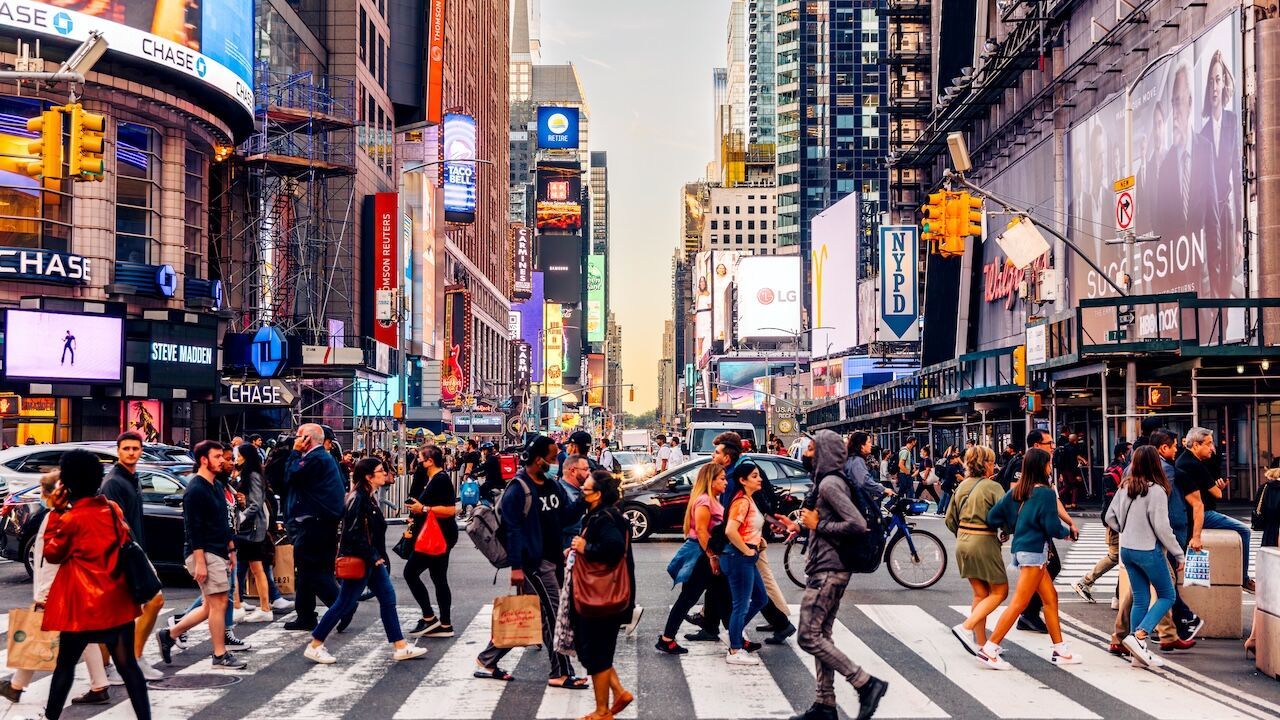
Travelling across the United States this summer—from the industrial landscapes of Ohio to the innovation ecosystem of California
Travelling across the United States this summer—from the industrial landscapes of Ohio to the innovation ecosystem of California—I found myself asking a deceptively simple question: has America merely changed politically, or is a much deeper social transformation under way? The answer came not from politicians, economists or Silicon Valley executives, but from a thoughtful young American I met in San Francisco.
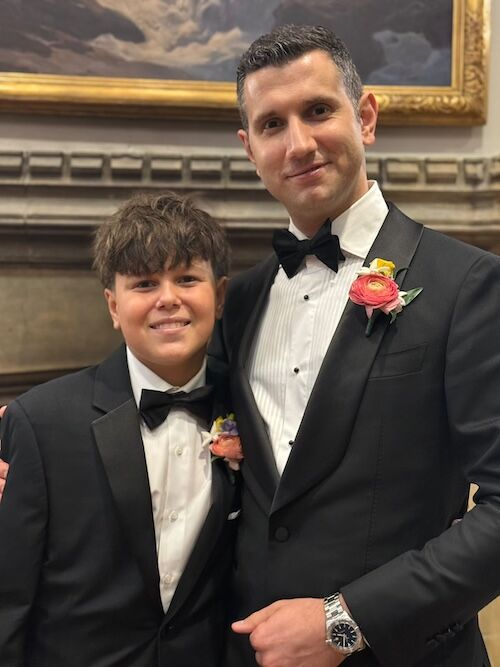
Anton Giderim, an articulate member of Generation Z with Turkish and Russian roots, belongs to a generation that has never known a world without smartphones, social media, geopolitical uncertainty and relentless technological disruption. Our conversations became, in many respects, a window into an America that older generations often struggle to understand.
Like many of his peers, Anton speaks with an intriguing mixture of confidence and caution. He is optimistic about technology yet deeply aware of its unintended consequences. He embraces innovation without assuming it will automatically improve people’s lives.
“We don’t expect life to move in a straight line anymore,” Anton told me. “My grandparents prepared for one career. My generation is preparing for constant reinvention.”
That single observation captures one of the defining characteristics of today’s America.
Education Without a Finish Line
The first change concerns education.
For previous generations, graduation represented the end of formal learning and the beginning of professional life. Today’s young Americans increasingly see education as a lifelong process rather than a one-time achievement.
“A university degree still matters,” Anton says, “but learning has become permanent. Artificial intelligence is evolving so quickly that standing still is no longer an option.”
He is far from alone. Employers increasingly recruit for adaptability, creativity and digital fluency alongside academic credentials. Online courses, coding academies, entrepreneurial ventures and continuous professional development have become integral parts of modern education.
The diploma is no longer the destination; it is merely the starting point.
Freedom Has Become the New Measure of Success
Economic success is also being redefined.
“My parents wanted stability,” Anton says with a smile. “I want choices.”
For many younger Americans, flexibility has become more valuable than hierarchy, purpose more attractive than prestige, and independence more desirable than climbing a corporate ladder.
“Freedom,” he adds, “is becoming a new form of wealth.”
Living in San Francisco, where entire industries are created—and disrupted—within a few years, it is easy to understand why. Careers are increasingly viewed as portfolios rather than lifelong commitments. Entrepreneurship is no longer an exception; it is becoming a mainstream aspiration.
Values Matter as Much as Valuation
Business itself is undergoing a quiet cultural transformation.
“We don’t just ask what a company produces,” Anton observes. “We ask what it believes.”
His generation examines environmental responsibility, labour practices, corporate governance, data privacy and social impact with an intensity rarely seen before.
“Profit is essential,” he says. “But trust has become equally valuable.”
There remains, of course, a gap between corporate rhetoric and corporate behaviour. Yet ethical credibility has undeniably become a strategic asset in attracting both customers and talent.
Fashion as Personal Identity
The transformation extends beyond economics.
“I’d rather wear something authentic than something expensive,” Anton laughs.
Among younger Americans, individuality increasingly outweighs conspicuous consumption. Vintage clothing, sustainable brands and independent designers often command greater admiration than traditional luxury labels.
Fashion is becoming less about signalling social status and more about expressing personal identity.
Hyperconnected, Yet Increasingly Lonely
Perhaps Anton’s most striking reflection concerns relationships.
“We’ve never been more connected,” he says thoughtfully, “yet many people have never felt more alone.”
Technology has removed geographical barriers but has not necessarily strengthened emotional ones. Dating applications have multiplied opportunities while making commitment more elusive. Social media creates visibility without always creating belonging.
Many young Americans are postponing marriage and parenthood—not because they reject family life, but because economic uncertainty, housing costs and changing personal priorities have fundamentally reshaped adulthood.
Living with Both Anxiety and Opportunity
If one emotion defines Generation Z, it is paradox.
“We’re anxious about artificial intelligence, housing, climate change and global instability,” Anton explains. “But we’re also excited because we’ve never had so many opportunities to create something ourselves.”
This coexistence of uncertainty and optimism is perhaps the defining psychological characteristic of modern America.
Never before has a young entrepreneur possessed such immediate access to global markets, powerful technologies and virtually unlimited information. At the same time, never before has the future appeared so unpredictable.
Reinventing the American Dream
Listening to Anton, I was reminded that America has always excelled at reinventing itself.
The American Dream has never been a fixed destination. It has continuously evolved alongside the country itself.
“My grandparents inherited a roadmap,” Anton told me before we parted. “My generation inherited a compass.”
It is a remarkably perceptive observation.
Today’s younger Americans are not abandoning ambition. They are redefining its meaning.
Education is becoming lifelong rather than finite. Careers resemble journeys rather than ladders. Business is judged increasingly by values as well as profits. Fashion celebrates authenticity over status. Technology creates extraordinary opportunities while introducing unprecedented anxieties.
America remains, above all, a nation of reinvention.
The difference today is that reinvention is no longer an occasional episode in the country’s history. It has become a permanent condition of modern American life.
Anton Giderim is, of course, only one young voice. Yet his reflections echo those of millions of Americans who are quietly rewriting the assumptions that shaped their parents’ generation. If one wishes to understand where the United States is heading, it may be worth listening less to Washington’s political debates and more to conversations taking place in university cafés, co-working spaces and neighbourhood coffee shops across the country.
By Mehmet Öğütçü
San Francisco