

By Ozodbek Nazarbekov, Minister of Culture of the Republic of Uzbekistan
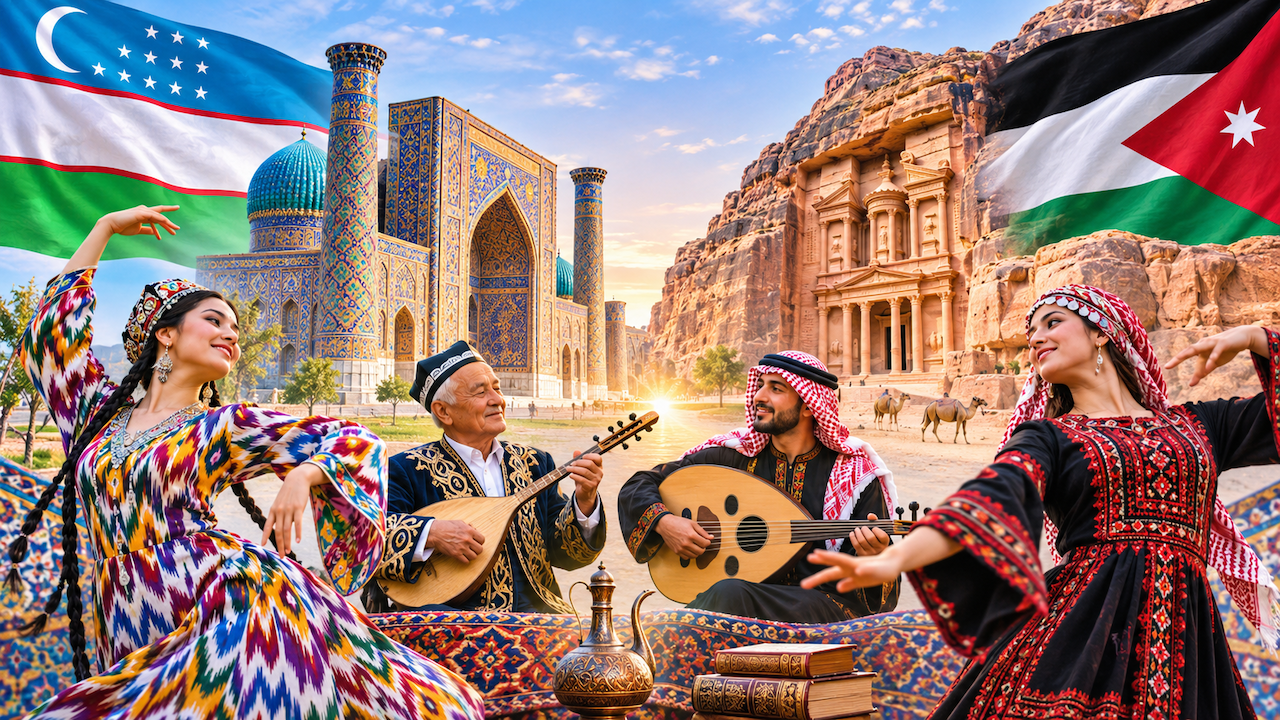
Despite the geographical distance separating Uzbekistan and Jordan, the two nations share a remarkable cultural affinity rooted in their respect for history, devotion to spiritual heritage and appreciation of art, education and knowledge. In recent years, these common values have provided a strong foundation for expanding cultural cooperation, bringing the peoples of both countries closer together.
Jordan, a country in Southwest Asia renowned for its rich history, hospitality and vibrant artistic traditions, has increasingly become an important cultural partner for Uzbekistan. Alongside growing economic relations, cultural exchanges between the two countries have gained fresh momentum, creating new opportunities for collaboration in music, dance, heritage preservation and creative industries.

A Partnership Rooted in Shared Values
Cultural relations between Uzbekistan and Jordan have developed steadily through high-level meetings, international festivals and joint initiatives aimed at strengthening mutual understanding.
A significant step in this direction came on 3 October 2024, during a meeting with Her Royal Highness Princess Dana Firas of the Hashemite Kingdom of Jordan.
The discussions focused on expanding cooperation through joint educational programmes, projects dedicated to tangible and intangible cultural heritage, artistic exchanges and the development of creative industries.
Both sides also welcomed the growing collaboration within the framework of the Islamic World Educational, Scientific and Cultural Organization (ICESCO), highlighting the importance of international partnerships in safeguarding cultural traditions and promoting artistic innovation.
These exchanges reflect a shared understanding that culture is more than a connection to the past. It is also a powerful instrument for dialogue, mutual respect and sustainable development.
Festivals Bringing Nations Together
International cultural festivals hosted by Uzbekistan have played a particularly important role in strengthening relations with Jordan.
One of the notable milestones was the participation of Jordanian representatives in the international cultural forum Central Asia at the Crossroads of World Civilisations, held in the historic city of Khiva from 14 to 16 September 2021.
With its extraordinary architectural monuments and centuries-old cultural legacy, Khiva provided a fitting setting for discussions about the historical connections between civilisations and the importance of preserving their shared heritage.
Cultural exchanges continued through Jordanian participation in the International Lazgi Dance Festival, held from 25 to 30 April 2022, and its subsequent edition in 2024.
The festival celebrates Lazgi, one of Uzbekistan's most distinctive traditional dance forms, whose expressive movements and rich symbolism reflect the artistic spirit of the Uzbek people.
Another important occasion was the International Maqom Art Festival, held in Zomin from 26 to 28 June 2024, where Jordanian representatives joined artists and cultural figures in celebrating the musical heritage of the East.
Maqom, with its intricate melodies and profound emotional depth, demonstrates how music can transcend linguistic and geographical boundaries.
A listener may not understand the language of a maqom performance, yet the emotions, elegance and philosophy expressed through its melodies remain universally accessible.
This is the extraordinary power of art: its ability to connect people through feelings and experiences that require no translation.
The participation of a Jordanian representative in the Sharq Taronalari International Music Festival, held in Samarkand from 26 to 30 August 2025, further strengthened these artistic connections and provided another opportunity to introduce the musical traditions of Eastern peoples to international audiences.
Preserving Heritage Through Cultural Dialogue
Beyond music and dance, cooperation between Uzbekistan and Jordan has increasingly embraced the preservation and promotion of intangible cultural heritage.
The participation of Jordanian journalists in the fourth International Festival of Bakhshi Art, organised in Khiva from 26 to 28 April 2025, highlighted the important role of media and cultural communication in bringing traditional art forms to wider audiences.
Bakhshi art occupies a special place in Uzbekistan's cultural identity. Through epic storytelling, poetry and musical performance, bakhshi artists preserve the historical memory, aspirations and spiritual values of generations.
Introducing this tradition to international audiences is not simply an act of cultural promotion. It is an opportunity to deepen mutual understanding and encourage appreciation of the diverse artistic expressions that enrich humanity's shared heritage.
Another significant milestone came with the participation of a Jordanian delegation led by Minister of Culture M. Al-Rawashdeh in the opening events of Samarkand – Cultural Capital of the Islamic World 2025, held from 26 to 28 May 2025.
The occasion reinforced Samarkand's historical significance as a crossroads of civilisations and a centre of intellectual, artistic and spiritual exchange.
It also demonstrated the continuing importance of cooperation among countries of the Islamic world in preserving their cultural legacies while adapting them to contemporary realities.
Looking Ahead: Creativity, Education and Cultural Tourism
While festivals and official meetings provide valuable platforms for cultural exchange, the future of Uzbekistan–Jordan relations lies in transforming these connections into lasting partnerships.
Joint educational initiatives, exchanges among young artists, cooperation between heritage specialists and collaborative creative projects offer considerable potential.
There is also significant scope for expanding cooperation in cultural tourism and creative industries, sectors that can contribute not only to mutual understanding but also to economic growth and social development.
Preserving historical heritage should not mean treating it merely as a collection of relics from the past. Cultural traditions must remain meaningful, engaging and accessible to younger generations.
By combining traditional knowledge with modern technologies, innovative approaches and international expertise, Uzbekistan and Jordan can develop initiatives that give their cultural heritage renewed relevance.
Such cooperation can also help nurture a new generation of artists, researchers and cultural professionals who view the preservation of heritage as a shared international responsibility.
Culture as a Bridge to the Future
The success of cultural cooperation cannot be measured solely by the number of festivals organised, delegations exchanged or agreements signed.
Its true value becomes evident when the art of one nation resonates with the people of another, when young creative minds establish lasting connections and when cultural heritage becomes a source of shared inspiration.
The growing relationship between Uzbekistan and Jordan demonstrates that geographical distance need not be an obstacle to meaningful cultural dialogue.
On the contrary, the distinct traditions and historical experiences of both nations offer opportunities for mutual enrichment and discovery.
As Uzbekistan and Jordan continue to strengthen their partnership, culture will remain one of the most powerful forces bringing their societies together.
Ultimately, culture is not merely a means of remembering the past. It is a spiritual force that enables nations to build a common future while preserving their unique identities.
Geographical boundaries may determine the distance between countries, but it is culture that brings peoples closer together. And the greatest beauty of this connection lies in the ability of one nation to understand the spiritual world of another without losing its own identity.
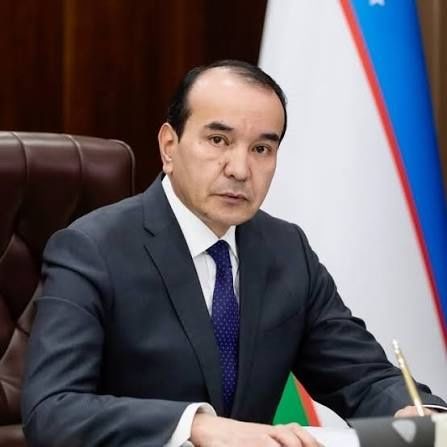
Ozodbek Nazarbekov
Minister of Culture of the Republic of Uzbekistan