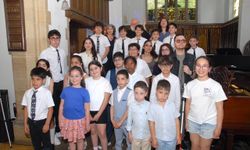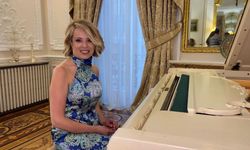

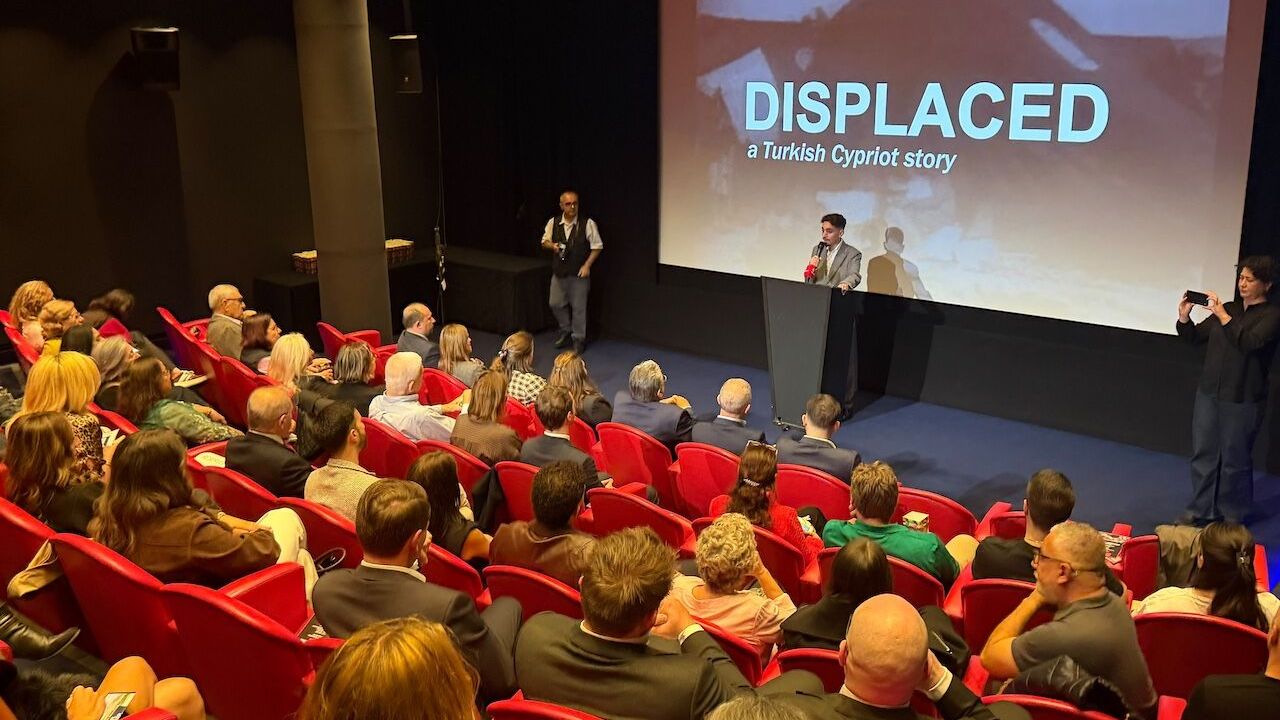
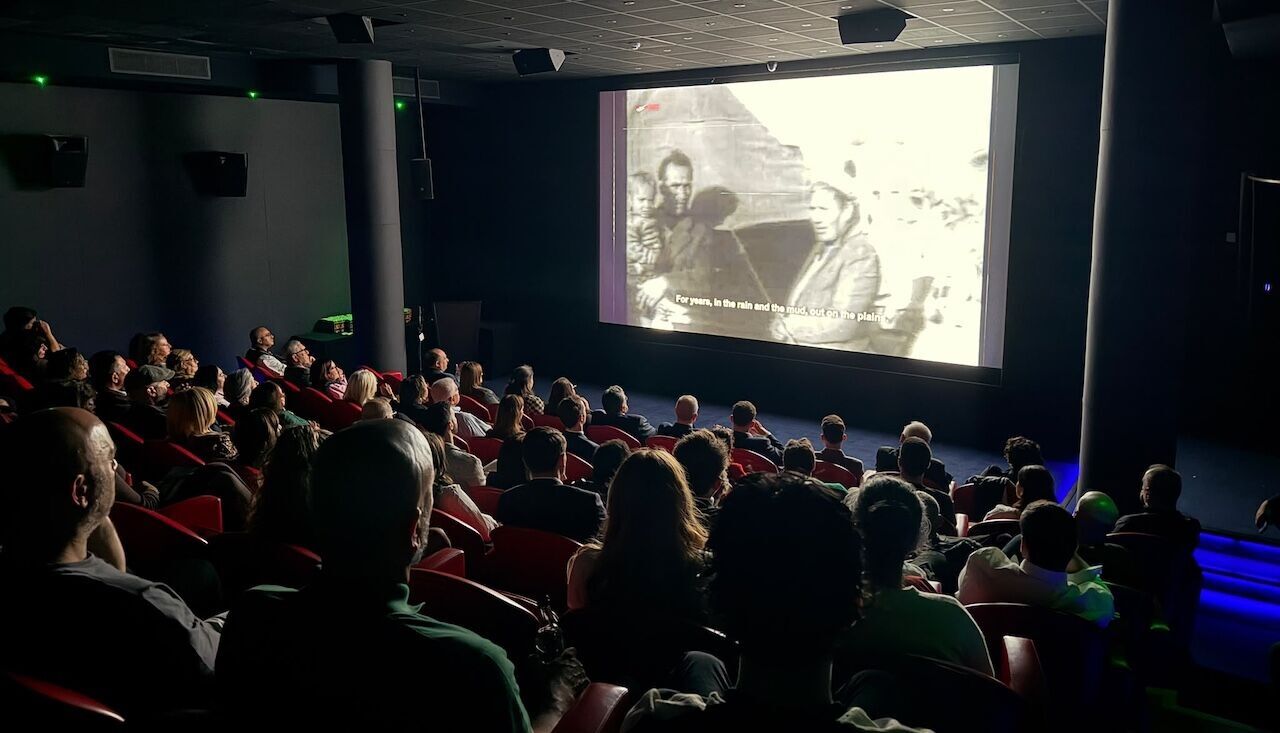
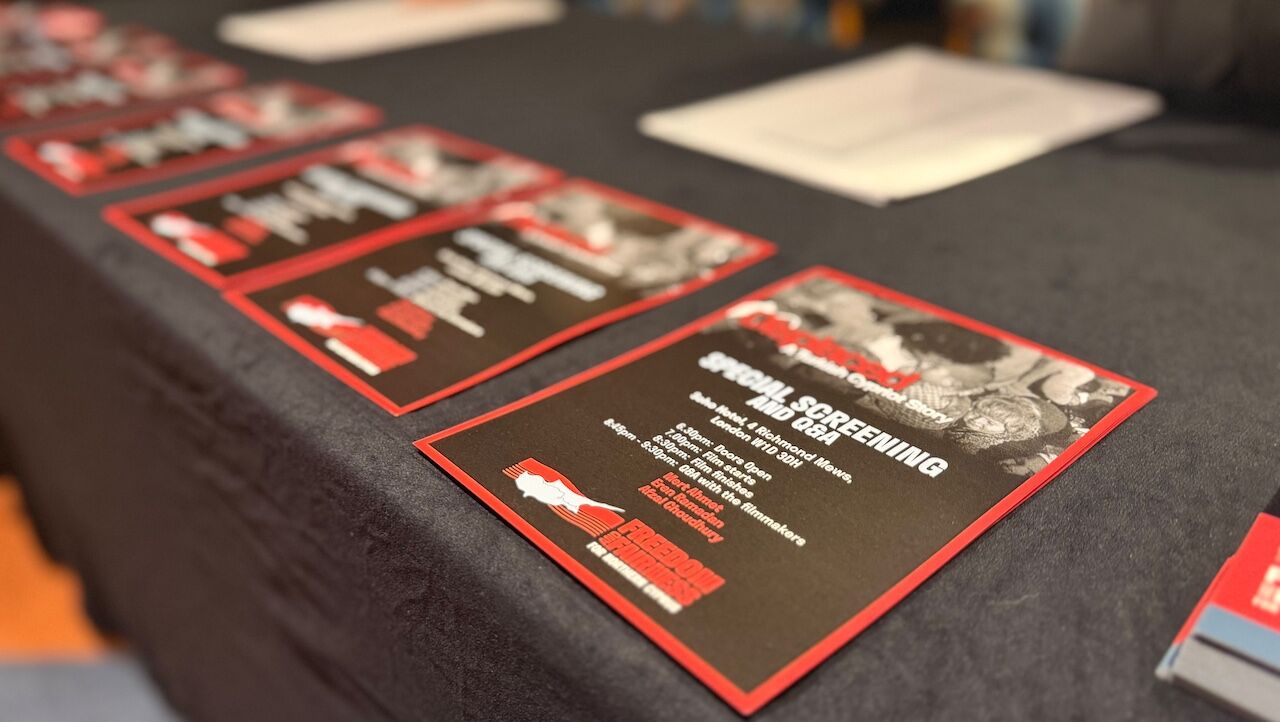
More than 100 guests gathered at the Soho Hotel in the heart of London last night for a special screening and Q&A of DISPLACED: A Turkish Cypriot Story, one month after the documentary's release.
The Soho Hotel's private screening room, a fixture of the London film industry and a venue long associated with British premieres, provided the setting for a full house drawn from diplomacy, media, local government and the Turkish Cypriot population in the United Kingdom.
The evening was attended by Her Excellency Aysan Mullahasan Atılgan, Ambassador of the Turkish Republic of Northern Cyprus, and His Excellency Professor Doctor Hasan Ulusoy, Consul General of the Republic of Türkiye, alongside members of the international press, British councillors, and representatives of Turkish Cypriot organisations.
Among those present were Alp Mehmet, the former British Ambassador to Iceland, and Professor Mustafa Bilgin Ali Djamgoz, Professor of Cancer Biology at Imperial College London and Chairman of the College of Medicine's Science Council.
The screening was followed by a Q&A with the film's producer and presenter.
Introducing the evening, presenter Mert Ahmet said the team had returned to the drawing board after the success of their previous documentary, Offside: The Untold Story of Sports in the TRNC, which received coverage on TRT World and was distributed on Amazon Prime and Apple TV.
"We came to the conclusion that before we continue highlighting North Cyprus and Turkish Cypriots to the world, we have to talk about the past, the history, and the sacrifices made for us to be here today."
Producer Eren Ramadan set out why the film was made:
"The story of Cyprus, as it is told in this country and across Europe, is almost always told from one side. It begins in 1974, as though nothing happened before it, as though the island woke up one morning and everything changed. Turkish Cypriots were displaced years before that. Decades even. From their villages, their homes, and forced into enclaves. That part of the story has never really reached a global audience."
"Displaced is unapologetically the Turkish Cypriot side of the story. Far too many documentaries on Cyprus tell only one narrative, or include us as a footnote - a paragraph near the end, a line of balance and a box ticked. That is not what this is. This is plainly and simply the Turkish Cypriot story, told by Turkish Cypriots, without apology and without asking for anyone's permission."
He noted that the film has passed 42,000 views on YouTube in its first month, with hundreds of thousands more across social media, and described the project as a personal one: his own uncle, Vedat Esendağ, appears in the film, as do Mert Ahmet's grandfather, Kemal Ahmet, and Ambassador Atılgan's uncle, Taner Çuvalcıoğlu.
"These are our families, our stories, and I think that's why it carries the weight it does."
Both speakers thanked the Freedom and Fairness for Northern Cyprus campaign for its support. "Turkish Cypriots have spent fifty years being talked about rather than being heard," Ramadan said.
Guests were invited to use a QR code provided at the venue, linking to a pre-written letter to their local Member of Parliament on the continuing isolation of Turkish Cypriots.
About the film
DISPLACED: A Turkish Cypriot Story is told entirely through the first-hand testimony of those who lived it, tracing the experiences of the Turkish Cypriot people across three of the most turbulent decades in the island's history — from the 1950s, through the 1960s, and up to 1974 and its aftermath. It follows a thread of displacement, loss and endurance: of homes abandoned, villages burned, and livelihoods destroyed.
The documentary moves through the years of EOKA, the events of Bloody Christmas in December 1963, the Larnaca Missing Bus, the siege of Erenköy, and the attacks on Turkish Cypriot villages, before reaching 1974 and the massacres at Taşkent and at Muratağa, Sandallar and Atlılar, and closing on the population exchange agreement of 1975 that reshaped the island into the one we know today.
The film is supported by the Freedom and Fairness for Northern Cyprus campaign and is available free to watch on the campaign's YouTube channel.
Watch here: https://youtu.be/S0JfaaN6duQ