
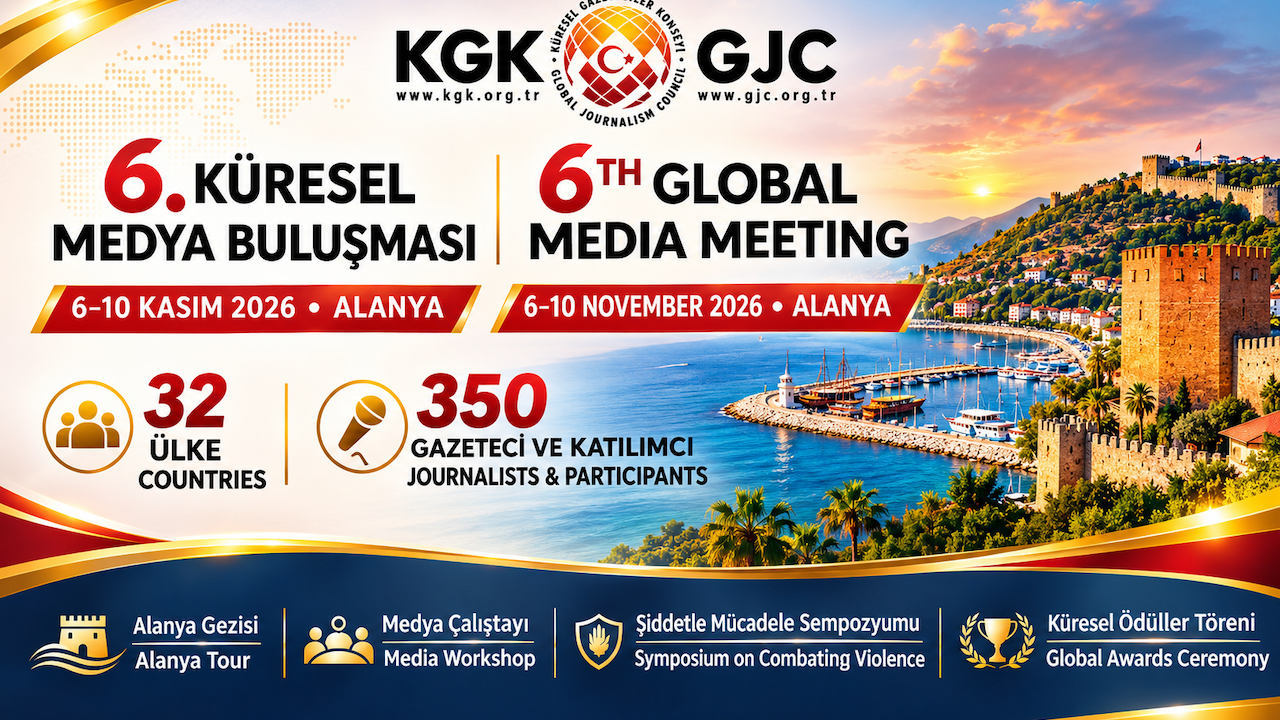
During the Local Media, National Media, Foreign Media, and Digital Media Assembly meetings held as part of the Global Journalists Council (KGK) 6th Alanya Global Media Workshop, the economic, professional, legal, technological, and ethical problems of Turkish media were comprehensively evaluated.
Based on assessments conducted using the views of journalists, media representatives, and industry stakeholders from various media outlets, a consensus has emerged regarding the protection of the reputation of the journalism profession, the strengthening of press freedom, the ensuring of the economic sustainability of media organizations, and the enhancement of professional solidarity.
It has been decided that the key findings, demands, and working topics that emerged from the workshop will be presented to the public in accordance with the views unanimously expressed by all elected boards.
CONCLUSIONS AND DECISIONS
1- Efforts will continue on all platforms to work towards a Professional Association Law.
It has been decided to continue working on the Professional Association Law with the aim of strengthening the legal status of the journalism profession, guaranteeing professional rights, and establishing common standards in the sector. The work of the previously established commission will be further developed, and consultations with relevant institutions will continue. The reason for our insistence on the Press Professional Association Law is to guarantee freedom of the press.
2. Economic sustainability and fair competition must be ensured in the media.
New support and revenue models should be developed to address the economic problems of local, national, and digital media organizations. Fairness and equality should be ensured in the distribution of official announcement, subscription, and advertising revenues; practices that put Anatolian media at a disadvantage compared to large media organizations should be re-evaluated.
3. The discrepancies in the Press Advertisement Agency's measurement system should be eliminated.
To prevent discrepancies between Press Advertisement Agency (BİK) data and Google Analytics measurements from negatively impacting media organizations' revenues and rights, a technical review should be conducted, measurement criteria should be made transparent, and ongoing discussions with BİK should continue.
4. Revenues generated from digital platforms should be increased.
Efforts should be made to ensure that media organizations publishing on Google, YouTube, Facebook, and other digital platforms receive a fairer share of the revenue generated from their content. Publishers should not be solely dependent on click and view revenue; the development of alternative revenue and subscription models should be supported.
5. Copyrights must be legally protected.
Unauthorized use of news, photographs, videos, and original content produced by journalists and media organizations must be prevented. Efforts should be made to implement copyright regulations that protect the work and rights of content creators in the face of digital platforms.
6. Editorial independence and freedom of the press must be protected.
Journalists must be guaranteed the ability to perform their duties without political, economic, or personal pressure. Editorial independence must be paramount, protecting against interference in publishing policies from the government, opposition, public institutions, advertisers, and other power centers. Freedom of the press and journalistic responsibility must be considered together.
7. Ethical principles and professional standards in journalism should be strengthened.
A common ethical declaration or guideline should be prepared against disinformation, unverified news, self-serving journalism, publications aimed at threats and blackmail, and the misuse of journalistic identity. A distinction should be made between criticism and defamation, and accurate and reliable reporting should be considered a fundamental principle.
8-Professional responsibility should be the guiding principle in combating illicit journalism.
Organizations operating in the digital publishing sector must be ensured to fulfill their professional, legal, and ethical responsibilities. Transparency, accountability, corporate identity, and respect for labor should be prioritized in publishing, without opposing the entry of new publishers into the sector. Oversight mechanisms must be objective and free from arbitrary practices.
9. The working conditions and personal rights of journalists should be improved.
Journalists' job security, wages, social rights, working conditions, and concerns about their professional future should be considered among the sector's top priorities. Necessary measures should be taken to ensure that the economic problems of media organizations do not translate into a loss of rights for their employees.
10. Young journalists should be encouraged to enter the industry.
To increase internship and employment opportunities for communication faculty students, to transfer the knowledge of experienced journalists to younger generations, and to strengthen professional training opportunities, cooperation should be developed between media organizations and academia.
11- Press card procedures should be re-evaluated. Problems in accessing press cards should be addressed, and the experiences of journalists working in the field should be taken into account in determining professional identity. The establishment of fair and objective criteria that protect the quality of journalistic activity should be supported.
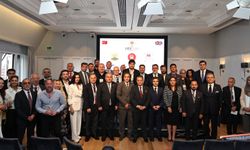
With representation in 12-88 countries, the KGK (Turkish Journalists' Association) has decided to develop its activities in various countries, both in terms of transferring professional experiences and realizing new collaborations in diplomacy. In this context, it has addressed the validity of journalist cards in international institutions and the process of their integration into international institutions, and has decided to take the necessary initiatives in this regard.
13- Common principles regarding the use of artificial intelligence should be established.
Considering the increasing use of artificial intelligence in news production, common principles based on verification, transparency, source security, and human oversight should be prepared. It is suggested that training programs be organized first, followed by the publication of a professional guide or declaration on this subject.
14. Legal processes and human rights violations against journalists should be monitored.
Legal problems, detention and arrest processes, and access restrictions faced by journalists in carrying out their duties should be monitored within the framework of professional principles. A common approach should be developed regarding the protection of freedom of expression and the press, and the oversight of defense and legal evaluation processes.
15. Professional solidarity and institutional cooperation should be strengthened.
Communication and cooperation should be increased among national, local, and digital media organizations; and the problems faced by journalists should be approached in accordance with common professional principles, regardless of editorial line, political views, or institutional differences.
As the Global Journalists Council (KGK), our fundamental priority is to create a media structure that is freer, stronger, economically sustainable, committed to ethical values, and has earned the trust of the public.
Journalism is not only about producing news, but also about defending the public's right to accurate information and fulfilling its oversight role on behalf of the public. To fulfill this responsibility, journalists need to have free, secure, and independent working conditions.
The views and recommendations put forward at the 6th Global Media Workshop will be followed up; discussions will be held with relevant institutions and organizations to ensure that feasible decisions are transformed into concrete actions.
We respectfully announce to the public that we will continue our struggle for a future in which a more accurate, freer, higher-quality, and responsible media is strengthened.