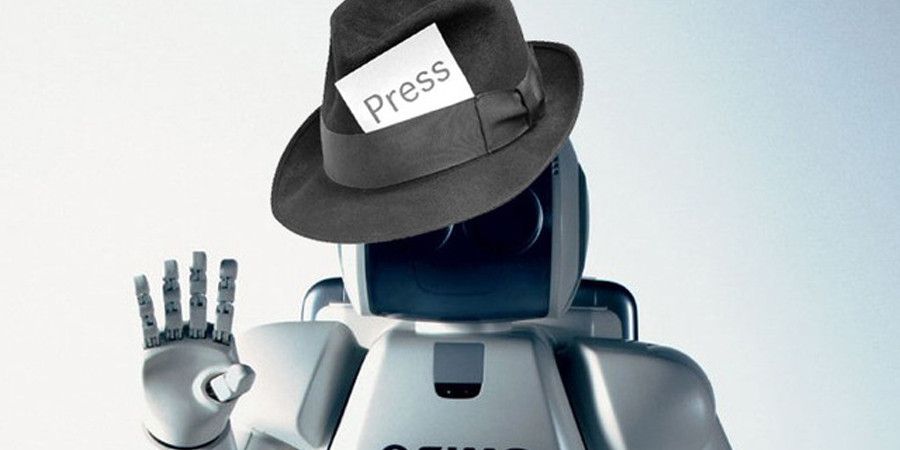




A newsroom in America broke a major story hours before the big media organisations. And it did so without a single journalist in the newsroom. Is journalism dead?
A newsroom in America broke a major story hours before the big media organisations. And it did so without a single journalist in the newsroom. No journalists. No editors. No people. This is how the new newsrooms work. For years, we chased stories. We worked through the night. Now there are systems that can do the same job in six minutes.
A newsroom in America broke a major story hours before the big media organisations.
And it did so without a single journalist in the newsroom.
Zero journalists...
Zero editors...
Zero people...
Is journalism dead?
Long live the new journalism!
I have been a journalist for years. I know the smell of a newspaper fresh off the printing press in 1992. I also witnessed how the internet transformed the world of news in 2002. In November 2013, I had the privilege of seeing our newspaper, Avrupa, become one of the most widely read Turkish-language news websites in the world, including in Türkiye. Since 2020, my team and I have shared the pride and responsibility of making Avrupa Europe's largest newspaper.
Now, however, we are facing an entirely different era. Our rivals are no longer just other newspapers, reporters and editors. Robots have established their own newsrooms, too.
And they are certainly not sitting idle.
AI-powered newsrooms are becoming increasingly common, from America to Canada, from the UK to Italy, and across Europe and other parts of the world. They scan news sources, compare information, write articles and prepare content for publication. Some do all this without a single journalist in the newsroom.
The US-based RuntimeWire is a striking example. It reported a significant development at a cybersecurity conference hours before some of the world's major media organisations. Its initial news report was ready approximately six minutes after information had been fed into the system.

Six minutes!
Just think about how a journalist can sometimes spend hours making a single phone call.
Gretel Kahn of the Reuters Institute, supported by the University of Oxford and the Thomson Reuters Foundation, has reported on developments of this kind. In Italy, there is Redazione Zero, where machines handle much of the news selection and writing. In Canada, Journal Métro uses AI to prepare routine news stories, which are then checked by a journalist. Kahn's detailed report examined these developments and included interviews with several AI-powered news organisations.
In other words, the question is no longer what the future might look like. This transformation has already begun.
What really caught my attention was this.
For years, we chased stories. We searched for sources, made phone calls, conducted interviews and worked through the night to meet deadlines. Now, systems are emerging that can do the same job in a matter of minutes.
In the past, we competed against human effort.
Now, we are competing against machines.
So, will journalism come to an end?
I do not think that is the real question.
The real question is what journalism will become.
A machine can write a news story.
It can scan thousands of sources.
It can compare documents.
It can transcribe a meeting.
But journalism is about far more than writing articles.
Sometimes, it means knocking on a door and waiting for an answer.
Sometimes, it means asking questions when everyone else remains silent.
And sometimes, it means uncovering a truth that nobody wants to see.
Using AI to support journalism is one thing. Handing journalism over to machines entirely is quite another.
Media owners can use this technology to strengthen journalists' work, or they can use it to cut costs by making people redundant. The choice is theirs. But reducing the future of journalism to a calculation about producing more stories with fewer people would mean overlooking the very qualities that give our profession its value.
Then there is the reader to consider.
In a world where hundreds of news stories are published every day, whom can people trust?
Who is behind a story?
And who takes responsibility when false information is published?
This is where the importance of the journalist will become clear.
As someone who has worked as a journalist in London for many years, I can say this:
We cannot escape change.
We must understand new technologies and learn how to use them. But whatever happens, we must never lose the trust of our readers.
Producing news may become easier, but earning trust remains difficult.
Our rivals are no longer just other newspapers. Robots have launched their own news publications, too. They work tirelessly, without getting tired, without sleeping and without stopping.
Our rivals are robots, not newspapers!
Is journalism dead?
No. But the journalism we have known is facing a major test.
And now the real question is this...
In this new world, it will not be about who writes the most news stories.
It will be about who delivers journalism that people can genuinely trust.