
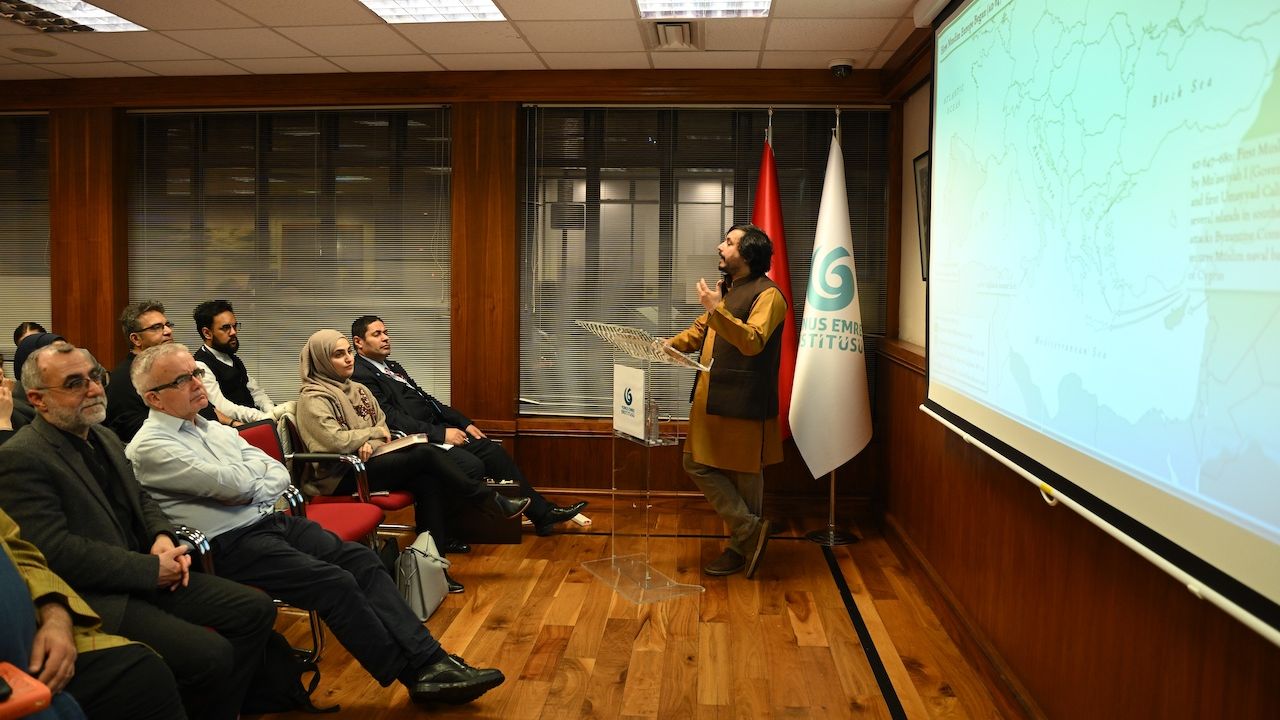
An evening of wide-ranging historical reflection unfolded as author and cultural historian Tharik Hussain presented his newest work, Muslim Europe: A Journey in Search of a Fourteen Hundred Year History. Organised by Yunus Emre Enstitüsü – London, in collaboration with the publisher of the book, Viking, Penguin Random House, the event formed part of the Institute’s Arts & Culture Lecture Series, recognised for convening nuanced discussions on culture, identity and the intellectual threads that connect diverse societies.
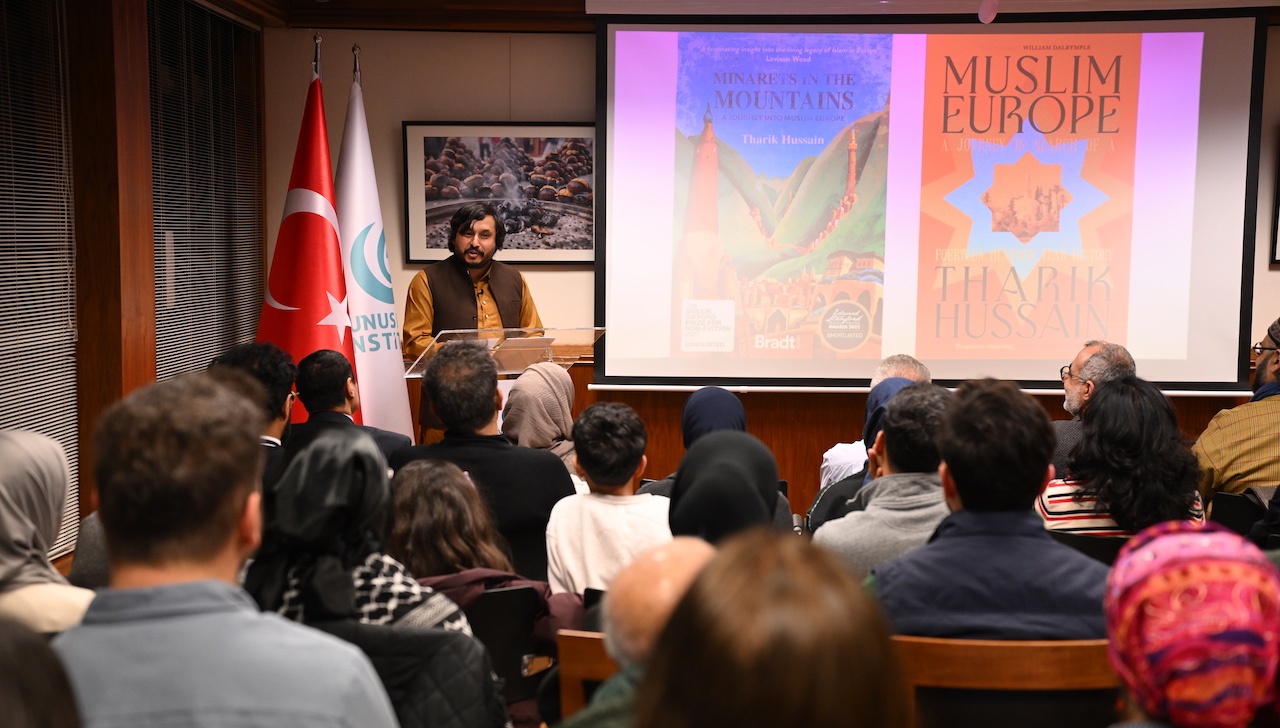
Hussain began by laying out the book’s central proposition: that Europe’s long and layered encounters with Muslim communities form a living part of the continent’s historical architecture. Rather than treating these encounters as episodic or peripheral, he encouraged the audience to consider them as formative, shaping the philosophical, scientific and artistic vocabularies that travelled across the Mediterranean and into mainland Europe.
Expanding on his extensive fieldwork, Hussain took listeners through the ports, archives and cultural landscapes of Sicily, Malta, Iberia, Cyprus and the Balkans. He described scholarly institutions where translations circulated across linguistic boundaries, maritime cities that sustained multiple intellectual traditions at once, and moments of shared artistic production that reveal a Europe more interconnected than familiar narratives suggest.
His reflections highlighted figures such as Ibn Rushd, whose philosophical interventions shaped medieval and early modern European thought, and Abbas Ibn Firnas, whose scientific explorations formed part of a wider intellectual curiosity present across the region. Hussain’s approach underscored the idea that Europe’s heritage is not a series of isolated civilisations but a continuous set of exchanges, borrowings and collaborations.

The discussion resonated with the audience, many of whom engaged in a lively and thoughtful Q&A that ranged across historiography, language, migration, collective memory and the responsibilities of cultural institutions in presenting a more capacious understanding of the past. The book signing that followed further extended the evening’s atmosphere of curiosity and reflection.
By situating Muslim Europe within both scholarly and public discourse, Hussain offers a renewed framework for thinking about Europe’s story, one attentive to continuity, movement and the shared cultural terrain that shaped the continent over centuries. The event marked a significant contribution to the Institute’s commitment to fostering considered dialogue around history and cultural heritage.